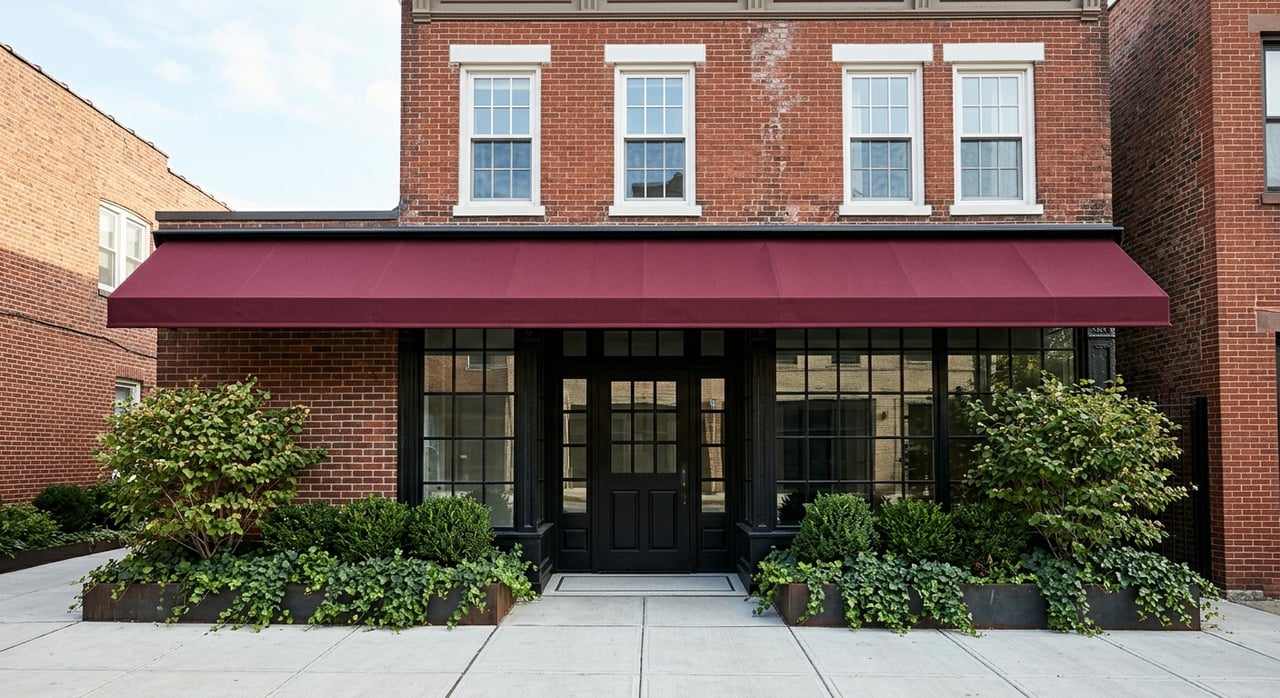
If you have been thinking about buying a small commercial or mixed-use property in Lancaster or Berks, you are not alone. These markets offer a practical entry point for investors and owner-users who want income potential, flexibility, and a property that can serve real business needs. With the right strategy, you can spot opportunities that go beyond flashy listings and focus on assets that match local demand. Let’s dive in.
Why Lancaster and Berks stand out
Lancaster County is the larger demand base, with an estimated 563,293 residents in 2024, 13,776 employer establishments, and 249,379 employees in 2023, according to U.S. Census data and local market reporting. Berks County also brings scale, with 439,117 residents in 2024. For you as a buyer, that means both counties offer a meaningful customer and tenant base.
The employment picture also supports smaller commercial spaces. Lancaster County ended December 2025 with 271,900 nonfarm jobs and 2.7% unemployment, while healthcare and manufacturing remained important drivers, according to the Lancaster County Workforce Development Board. In both Lancaster and Berks, the strongest demand is often tied to healthcare, food service, retail, trades, and local professional services rather than large corporate users.
That matters because small mixed-use buildings usually succeed when they match everyday local demand. In Lancaster City, planning analysis points to tourism, healthcare, education, manufacturing, and retail as major economic forces, with restaurants making up a large share of city retail businesses. You can see that in the city’s economic and real estate analysis, which helps explain why neighborhood-serving storefronts and walkable mixed-use properties continue to attract interest.
What “small commercial and mixed-use” means here
In this market, small commercial and mixed-use opportunities usually include buildings with a storefront or office on the ground floor and apartments above, compact retail or office buildings, and adaptive reuse properties that can support more than one income stream. Some buyers are investors looking for rental income. Others are owner-users who want to operate a business in one part of the building and lease the rest.
This category can work well because it offers flexibility. If one type of tenant weakens, another use may still fit the property. That flexibility can be especially helpful in corridors where the customer base includes residents, daytime workers, and visitors.
Typical pricing and lease benchmarks
Lancaster County generally commands higher asking prices than Berks County, especially for stabilized retail and downtown mixed-use assets. Current Crexi Lancaster County snapshots show an average of about $194 per square foot across commercial listings, with retail around $249 per square foot and a median cap rate near 6%. LoopNet Lancaster retail listings cited in the research also point to pricing in a similar range.
Active Lancaster examples show how location and condition can shift the numbers quickly. A fully occupied mixed-use property at 12-14 S Queen St was marketed at roughly $173 per square foot, while another renovated Lancaster City mixed-use asset at 512 N Market St was offered at a much higher total price point, according to this Lancaster mixed-use listing example. For you, that is a reminder that stabilized, visible, income-producing properties often trade at a premium.
Berks County is generally more affordable, but it can also be more variable. Crexi Berks County data shows commercial listings averaging about $152 per square foot, with retail averaging closer to $86 per square foot and median cap rates that are typically higher than Lancaster. That wider spread often reflects more repositioning and redevelopment opportunities.
Lease rates matter too, especially if you are underwriting a smaller building where one vacancy can change the whole picture. In Q1 2025, a Central Pennsylvania brokerage report showed Lancaster office vacancy at 3.9% with gross rent around $20.80 per square foot, and Lancaster retail vacancy at 3.1% with gross rent around $16.56 per square foot, according to the Q1 2025 market report. If you are evaluating a deal, those benchmarks can help you pressure-test your income assumptions.
Tenant types most likely to fit
The strongest tenant pool in Lancaster and Berks is usually local and practical. Based on the market and planning data, likely users include:
- Restaurants and coffee shops
- Specialty food businesses
- Salons and wellness services
- Dental and medical offices
- Therapy practices
- Childcare uses
- Accounting, insurance, and other professional services
- Real estate or consulting offices
- Trade or service businesses needing small flex space
In Lancaster, food and visitor-facing uses stand out in walkable areas because tourism and hospitality play a visible role in the local economy. The Lancaster County Chamber and the city’s planning documents both point to tourism, hospitality, and dining as important local drivers. That can make a well-located first-floor retail space more appealing to food, beverage, or convenience-oriented tenants than to a traditional office user.
In Berks, especially around Reading, the mix can look a little different. The local planning framework suggests demand tied to healthcare, education, logistics, local services, and housing-linked retail. The Reading Downtown Strategic Master Plan also emphasizes the value of walkable mixed-use areas supported by residents and institutions, not just office traffic.
Best corridors to watch in Lancaster
If you are focused on Lancaster, certain submarkets deserve extra attention. The city’s comprehensive planning process highlights Downtown, the Train Station Area, Northwest Gateway, East End, Sunnyside, Engleside, Manor Street South, and the Park City Mall Area as priority places for investment and redevelopment, according to the city’s draft comprehensive plan policies.
Downtown Lancaster remains the clearest premium submarket for small mixed-use assets. It is described in city planning work as the economic engine and a core place for mixed-use and transit-supportive development. If your goal is stable walk-in traffic and strong long-term visibility, this is often the benchmark area.
The Train Station Area and Northwest Gateway are also worth watching if you are looking at growth potential rather than only current income. The city’s planning vision calls for the Train Station Area to become a cohesive urban gateway neighborhood and for Northwest Gateway to evolve into a high-density, walkable mixed-use district. For a buyer with patience and a redevelopment mindset, those signals matter.
The East End also stands out because the city has identified a need for neighborhood-serving commercial uses there, including food-oriented retail. That can support smaller mixed-use buildings with straightforward commercial space on the ground floor and residential income above.
What to watch in Berks and Reading
Even though this post starts with Lancaster, Berks deserves a close look if you want more pricing flexibility or adaptive reuse potential. In Reading, the downtown core is a major focus. The Reading Downtown Strategic Master Plan identifies 5th and Penn as the city’s town square, Franklin Station as a mixed-use live-work-play area, and 9th and Penn as a redevelopment site.
There is also visible public-sector support for downtown Reading. In March 2026, the city announced a $52 million redevelopment letter of intent for Fifth and Penn, reinforcing long-term commitment to the core. For you, that can be a sign that nearby properties may benefit from improving momentum over time.
Beyond downtown Reading, Berks County planning points to the Route 422 corridor, along with portions of Route 562 and Route 662, as areas where future economic development and redevelopment are likely. The county’s planning materials also highlight adaptive reuse, including urban infill projects that transform underused industrial properties into apartments, retail, and hospitality uses. That makes Berks especially interesting if you are open to value-add or conversion plays.
How to evaluate a small commercial deal
A good deal is not just about the asking price. In small commercial and mixed-use properties, the most important questions often come down to usability, compliance, and capital needs.
Before you move forward, make sure you evaluate:
- Zoning and permitted uses
- Whether mixed-use is allowed by right or requires approvals
- Parking requirements
- Signage rules
- Historic review or design restrictions
- Utility capacity
- Building code issues
- Floor plan efficiency for likely tenants
- Ingress and egress
- Renovation and capital improvement costs
This is especially important in Lancaster and Reading, where many attractive opportunities involve redevelopment or adaptive reuse. The City of Lancaster zoning information page is a useful starting point when you are checking whether a property actually fits your intended use.
Incentives can change the math
On smaller assets, incentives can make a bigger difference than many buyers expect. Lancaster’s CRIZ program covers about 130 acres and is aimed at vacant and underutilized properties, while designated KOZ areas may offer additional benefits. You can review the city’s CRIZ program details to understand how these tools may support redevelopment.
Reading also has its own CRIZ framework, and the Berks County Redevelopment Authority can help direct federal, state, and local resources toward redevelopment and housing rehabilitation. If you are comparing two similar buildings, access to incentives may be the factor that improves your basis enough to make a project viable.
Why local guidance matters
Small commercial transactions can look simple from the outside, but they often require more hands-on review than a buyer expects. A local brokerage team can help you compare active listings to realistic value, flag zoning or layout issues early, and identify which corridors already show visible redevelopment momentum.
That is especially useful if you are deciding between a stabilized property and a value-add opportunity. One may offer easier financing and steadier income today, while the other may offer more upside if you have the right timeline and capital plan. The right strategy depends on your goals, your risk tolerance, and how much operational flexibility you want.
If you are exploring small commercial or mixed-use opportunities in Lancaster or Berks, working with a team that understands local planning, pricing, and investor priorities can save you time and help you make smarter decisions. Connect with Fowler & Co for clear guidance, responsive support, and a data-informed approach to your next move.
FAQs
What types of small commercial properties are common in Lancaster and Berks?
- Common options include mixed-use buildings with storefronts and apartments, small retail buildings, office properties, and adaptive reuse opportunities that can support multiple income streams.
Are Lancaster commercial properties usually more expensive than Berks properties?
- Yes. Current listing snapshots in the research show Lancaster County generally pricing above Berks County, especially for stabilized retail and downtown mixed-use assets.
What tenant types are strongest for mixed-use buildings in Lancaster?
- The research points to restaurants, coffee shops, specialty food, wellness services, medical and therapy uses, childcare, and local professional services as likely tenant fits.
Which Lancaster areas are important for mixed-use investment?
- City planning materials highlight Downtown, the Train Station Area, Northwest Gateway, East End, Sunnyside, Engleside, Manor Street South, and the Park City Mall Area.
What should you verify before buying a mixed-use property in Lancaster or Berks?
- You should confirm zoning, permitted uses, parking, signage, utilities, historic review, code compliance, layout efficiency, and renovation costs before moving forward.
Can redevelopment incentives help with small commercial properties in Lancaster?
- Yes. The research notes that Lancaster’s CRIZ and KOZ programs, along with similar redevelopment tools in Reading and Berks County, may improve the financial outlook for certain projects.